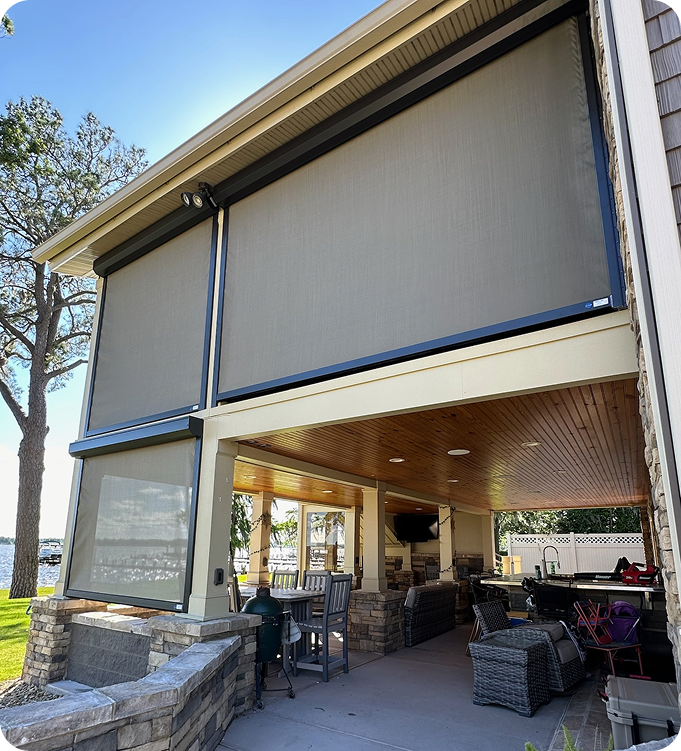
Living near the coast comes with a rhythm to the seasons, and summer calls for some intentional upkeep. Between rising humidity, salt-heavy air, and the potential for storms, pre-summer home maintenance takes on a different level of importance.
A thoughtful coastal home maintenance checklist helps safeguard not just your home’s appearance, but its structural integrity, too. The same goes for any protective systems — like hurricane shutters, outdoor shades, or screens — that stand up to the elements year-round.
From addressing everyday wear on these systems to full-on hurricane season home protection, preparing early lets you move into the season with confidence. That way, you’ll never find yourself weighing last-minute home protection decisions when a storm or heat wave is already on the radar.
Below, we’ll walk through five key areas to review as part of your pre-season routine, helping your summer months stay stress-free.
Step 1: Inspect Your Hurricane Shutters for Functionality
Your hurricane shutters are only effective if they’re working properly. Before the season begins, inspect each unit closely by:
- Opening and closing every shutter fully.
- Checking that tracks are clear, hardware is secure, and locks engage smoothly.
- If you have motorized systems, testing both primary and backup controls.
This is a key part of hurricane shutter prep — and the best way to catch small issues like corrosion, misalignment, or debris buildup before they become larger problems.
It’s also a good time to revisit the types of hurricane shutters on your home and how they’re designed to perform. Different systems come with different advantages. Some prioritize quick deployment, while others blend into your home’s exterior or provide everyday shade.
Making sure your shutters match the style of protection your home needs helps you stay ready for the season.
Step 2: Clean and Treat Retractable Awnings and Outdoor Shades
Awnings and outdoor shade systems play a dual role: they enhance comfort during the summer months and contribute to your home’s overall exterior protection. But coastal conditions can be tough on these materials, especially if they weren’t built with coastal climates in mind.
Salt air, moisture, and sun exposure can lead to buildup, fading, or premature wear if not addressed. As part of your shade and awning care routine, you can:
- Gently clean fabric surfaces.
- Remove any mildew or debris.
- Inspect frames and arms for signs of corrosion.
If your awnings are retractable, extend and retract them fully to confirm smooth operation.
Addressing stiffness or resistance early can prevent more significant mechanical issues later in the season.
Step 3: Check and Tighten Hardware on Screens and Enclosures
Outdoor screens, patio enclosures, and similar structures are often overlooked — even though they’re directly exposed to wind, moisture, and shifting temperatures.
As you walk around your home, take a closer look at key connection points and areas that carry the most stress. Focus on:
- Fasteners, brackets, and mounting hardware around frames and tracks.
- Points where screens or panels attach to the structure.
- Corners and edges where movement or loosening is more likely.
- Any visible signs of rust, corrosion, or material fatigue.
This step supports both everyday durability and broader storm season prep, especially if your screens are part of a larger system. Even small structural reinforcements can help these elements hold up better in strong winds.
Step 4: Secure Loose Fixtures Around Your Outdoor Living Space
Outdoor furniture, lighting fixtures, planters, and decorative elements can quickly become hazards during storms if they’re not properly secured.
Take a few minutes to walk your outdoor space and identify anything that could shift, tip, or lift in gusty conditions. Focus on:
- Lightweight furniture or décor that can be picked up by wind.
- Freestanding umbrellas, planters, and grills.
- Wall-mounted fixtures or lighting that may have loosened over time.
- Loose items on porches, balconies, or pool areas.
From there, anchor what you can, store smaller items in a garage or shed, and make a plan for quickly clearing your space if a storm is approaching.
This is one of the simplest, but most impactful, steps you can take for coastal storm prep — reducing risk not only to your home, but also to nearby properties.
Step 5: Schedule a Pre-Storm Season Inspection
Even with a thorough personal checklist, there’s value in having a professional take a closer look. A home inspection can help you identify pre-summer home maintenance needs that aren’t immediately obvious.
During the inspection, an experienced provider can check for:
- How well your systems would perform under sustained wind pressure, not just day-to-day use.
- Subtle installation issues or wear patterns that affect long-term durability.
- Gaps in coverage or protection around windows, doors, or larger openings.
- Opportunities to improve ease of use or deployment before a storm.
They’ll be able to point out early signs of wear, confirm everything is operating as intended, and flag any updates needed to meet local code or current conditions.
A More Confident Start to Storm Season
Preparing your home for summer on the coast starts with a simple maintenance routine that supports longer-term performance.
By following a clear coastal home maintenance checklist — and prioritizing key areas like hurricane shutter prep, system checks, and awning care — you set your home up to handle the season with fewer surprises.
At Creative Outdoor Solutions, we help homeowners up and down the Carolina coasts stay prepared with:
- Free on-site consultations and estimates
- Installation backed by a lifetime workmanship warranty
- Ongoing service and repairs for existing systems
If you’d like a second set of eyes to help you with storm season prep, schedule a consultation with our team. We’ll walk your property with you and help you identify anything worth addressing before the season picks up.